Back to Resources

Licensed advisor guide · Updated for 2026

The Turning 65 Medicare Checklist: A Licensed Agent's Month-by-Month Guide for 2026

Turning 65 in 2026 means a seven-month enrollment window, seven decisions that each cost thousands if you get them wrong, and at least three deadlines Medicare will not remind you about. This checklist walks through every step in the order a licensed agent would walk through them with you at the kitchen table — so you end up with the right Part A, Part B, Part D, and Medigap or Advantage choice for your life, not whichever plan showed up on TV last week. No hype, no pressure, and no stock photos of smiling actors.

What this checklist covers

  1. 1. The exact Initial Enrollment Period dates for your birthday.
  2. 2. A month-by-month checklist from twelve months out through year one.
  3. 3. The seven biggest decisions — doctors, drugs, Advantage vs. Medigap, and more.
  4. 4. The HSA trap that costs retirees an average $2,400 in IRS penalties.
  5. 5. A decision matrix for people still working past 65 with employer coverage.
  6. 6. Florida, California, and snowbird-specific rules most articles skip.
  7. 7. A printable PDF, answers to the ten questions we get asked most, and a free consult if you want a human to double-check your plan.

Your Initial Enrollment Period, In Plain English

Medicare calls the seven months around your 65th birthday the Initial Enrollment Period, or IEP. It is the one window where everyone who paid into Medicare gets automatic, no-questions-asked coverage. Miss it without a qualifying exception and you can end up paying a Part B late penalty for the rest of your life, plus a separate Part D penalty that also never goes away. So we start here, because this window drives every other date on the checklist.

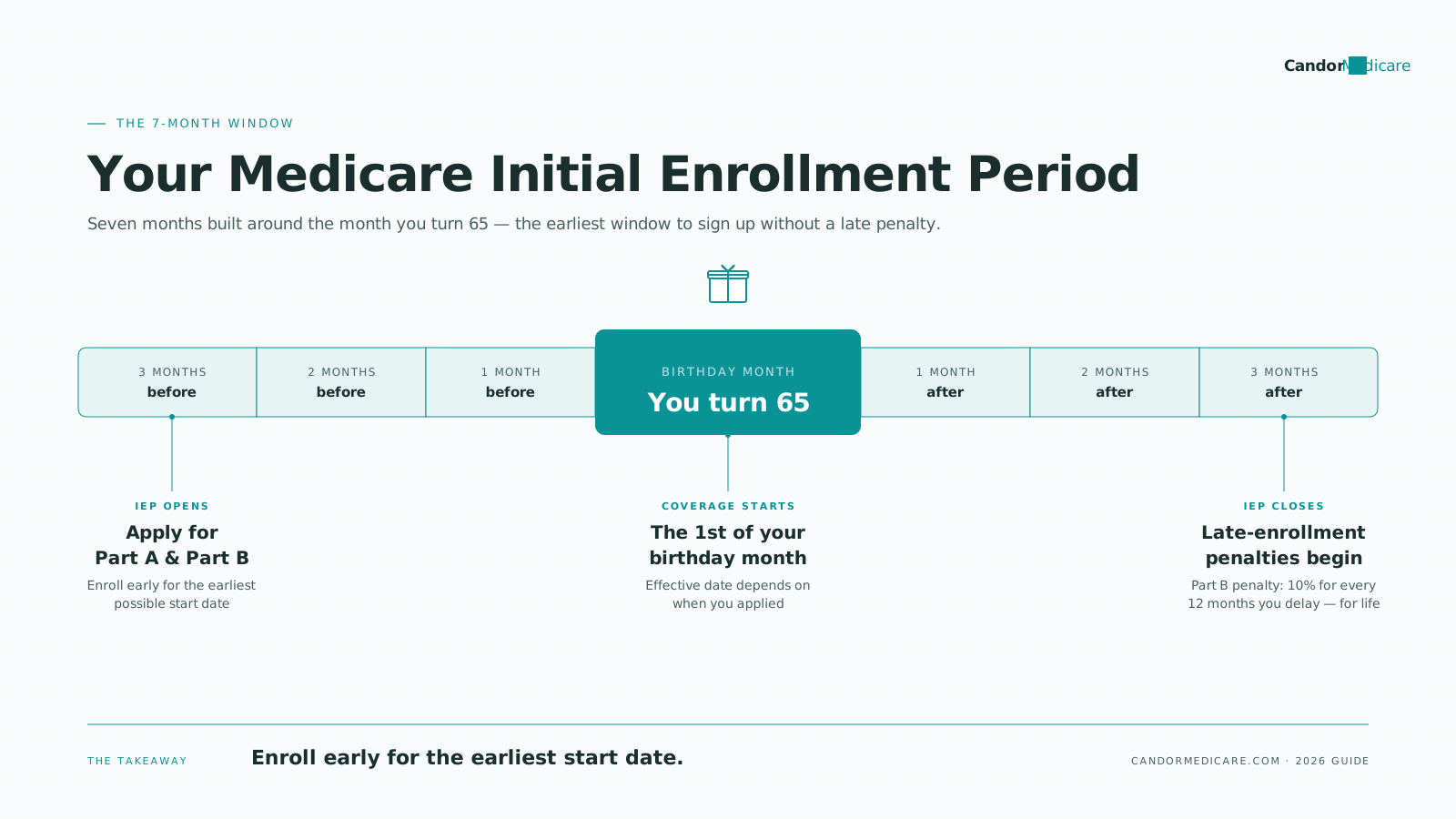
Your IEP begins three months before the month you turn 65, includes your birthday month, and closes three months after. That is seven months total. If you enroll during the first three months, your Part A and Part B start on the first day of your birthday month. Enroll during or after your birthday month and coverage starts the first of the following month. The four-week delay between signing up in your birthday month and actually being covered is the single biggest surprise we see — people assume coverage kicks in the minute they apply, and it does not.

Initial Enrollment Period timeline showing the seven-month window that opens three months before your 65th birthday month and closes three months after
Your IEP: three months before your birthday month, your birthday month, and three months after. Enroll early for earliest coverage.

A worked example

Let's take someone turning 65 on August 14, 2026. Their IEP opens May 1, 2026 and closes November 30, 2026. If they enroll any time between May 1 and July 31, Part A and Part B start August 1 — the first day of their birthday month. If they wait until August, coverage starts September 1. If they procrastinate until November, coverage starts December 1, and if they miss November 30 entirely, they likely cannot enroll again until the General Enrollment Period the following January, with coverage starting the month after enrollment.

That example also shows why you want a licensed advisor looking at the calendar with you. Most of our Florida and California clients turning 65 in 2026 end up scheduling a free consult about four months before their birthday, which lines up with the twelve-to-six-months-out block of the checklist below. It is a lot easier to fix a wobbly plan at month eight than to unwind a wrong choice at month one.

One exception to the IEP rules

If you are still working past 65 and covered by an active employer group health plan with 20 or more employees, you may skip some or all of the IEP without penalty and use a Special Enrollment Period later. That only applies to active employer coverage, not COBRA, not retiree coverage, not marketplace coverage. See the Still Working section below for the matrix.

The Month-by-Month Checklist

Six dated blocks. Work through them in order. Skim the items, tick off what you have done, and if a block feels fuzzy, that is the right moment to schedule a free consult before the next one opens.

12 months before

Twelve months out: lay the groundwork

This is the quiet stretch where a little homework removes almost every surprise later. You are not signing anything yet, just collecting the information a licensed advisor will eventually need to recommend a plan that fits your life.

  • Pull your last two years of medical and pharmacy claims. You can request them from your current insurer or download them through the member portal. Knowing what you actually used is the single best predictor of which plan will fit.
  • Make a list of every doctor, specialist, and hospital you see at least once a year, plus the ones you would not want to lose. Include address and NPI if you can find it — it makes network checks much faster.
  • Write down every prescription, including dose and 90-day supply, plus any over-the-counter supplement a doctor recommended. This is the single biggest source of plan-cost surprises.
  • If you are still working, talk to HR about what happens to your coverage when you retire and whether your spouse or dependents are affected.
  • Start a dedicated folder (paper or digital) for Medicare paperwork. You will accumulate 20 to 40 pieces of mail over the next year — they need a home.
6 months before

Six months out: stop HSA contributions and line up accounts

This is the latest you can safely make the HSA change without triggering IRS penalties, and it is early enough that you have time to fix anything that needs cleanup before the IEP opens.

  • Stop all HSA contributions, including any employer match. See the HSA trap section below for why this specific month matters.
  • Create a my Social Security account at ssa.gov if you do not have one. You will use it to file for Medicare and, separately, to review your future Social Security start date.
  • If you plan to take Social Security at the same time as Medicare, request the Social Security start-date estimate. Claiming Social Security auto-enrolls you in Medicare Part A and Part B.
  • Verify your US citizenship or lawful-permanent-resident documentation. Most people use their Social Security record, but a small minority needs to provide additional proof.
  • If you are married and your spouse is under 65 or on a different plan, check what happens to their coverage when you leave your employer plan. Families get tripped up here constantly.

3 months before

Three months out: the IEP opens — enroll in Part A and Part B

The first day of this month is the first day you can enroll in Medicare. If you want coverage active on day one of your birthday month, this is the month you file the paperwork.

  • File for Part A and Part B through ssa.gov/medicare or in person at your local Social Security office. Online takes about 15 minutes.
  • If you are already collecting Social Security or Railroad Retirement Board benefits, skip this step — you are enrolled automatically and will get a Medicare card in the mail.
  • Compare Medicare Advantage plans, Medigap policies, and Part D drug plans for your ZIP code. This is when a licensed advisor earns their keep — plans vary county by county, and the right choice depends on your doctor list and drug list.
  • If Medigap is on your list, understand the Medigap Open Enrollment Period: it is a six-month window that begins the first day of the month you are both 65 or older and enrolled in Part B. It is the only time a Medigap carrier cannot reject you or charge you more for health reasons.
  • Pick your primary plan direction: Original Medicare plus Medigap plus Part D, or Medicare Advantage. Do not finalize anything yet — just commit to a path so you can narrow plan shopping.

Birthday month

Birthday month: enroll in Medigap or Advantage and Part D

If you did not enroll in Part A and Part B last month, do it now. Then lock in the private-side plans that fill the gaps.

  • Finalize and submit your Medigap or Medicare Advantage application. Your Medigap Open Enrollment Period starts the first of your birthday month if Part B started then — this is the cheapest and easiest month to buy a Medigap policy.
  • Enroll in a Part D prescription drug plan unless your Medicare Advantage plan already includes drug coverage. Going without creditable drug coverage for more than 63 days after your IEP triggers a lifetime Part D penalty.
  • Set up your online member accounts with the new carriers so ID cards, explanations of benefits, and pharmacy tools are ready when you need them.
  • Pay the Part B premium. If you take Social Security, it is deducted automatically; otherwise set up Medicare Easy Pay for monthly withdrawal from your bank account.
  • Tell every doctor, specialist, and pharmacy your new Medicare and supplemental plan ID numbers at your next visit. Most plans let you print temporary cards while the real ones arrive.

3 months after

Three months in: validate the plan is working

Give the new coverage a quarter to prove itself. This is when small problems surface — a specialist that turned out to be out-of-network, a generic that costs more than you expected, a prior-authorization letter that confused you.

  • Review every Explanation of Benefits (EOB) for the first three months against your claims log. Watch for denied prior authorizations or out-of-network charges.
  • Check your Part D copays against the drug list on your plan portal. If a drug jumped a tier or went off-formulary, your advisor can appeal or plan a switch during Annual Election.
  • Confirm your primary care physician and at least one specialist are still in-network on the plan’s current directory. Directories change quietly.
  • Save any surprise bill or denial letter and scan a copy to your advisor. Most can be resolved with one phone call if addressed in the first 90 days.
  • If the plan is clearly wrong, you have one more chance to fix it during the Medicare Advantage Open Enrollment Period from January 1 to March 31, or through the Medigap trial right if you are less than 12 months into a first-ever Advantage enrollment.

Year one complete

Year one: review, refresh, and plan for Annual Election

You are now a Medicare veteran. The Annual Election Period from October 15 to December 7 is the yearly tune-up window where you can switch Advantage plans or Part D plans for the next year without health questions.

  • Re-pull your actual claims and pharmacy history for the full year. Use it to re-price Advantage and Part D options for next year.
  • Review the Annual Notice of Change (ANOC) your plan mails you in late September. This is where carriers quietly change networks, drug tiers, and copays.
  • Attend or schedule a fall review call with your advisor between October 15 and December 7. Every plan re-prices for January 1 — even if nothing major changed, your optimal plan might have.
  • Update your medication list, ZIP code, and primary care physician in your advisor’s records. People move, doctors retire, medicines change.
  • Reassess whether your plan direction still fits. If you started on Medicare Advantage and your health changed, the Medigap underwriting question becomes important; we will sketch the scenarios with you.

The Seven Key Decisions

Every Medicare choice you will make in 2026 collapses into one of these seven questions. We walk through each one with you before we ever quote a plan. If you answer three or four in writing before your first advisor call, the call gets about twice as productive.

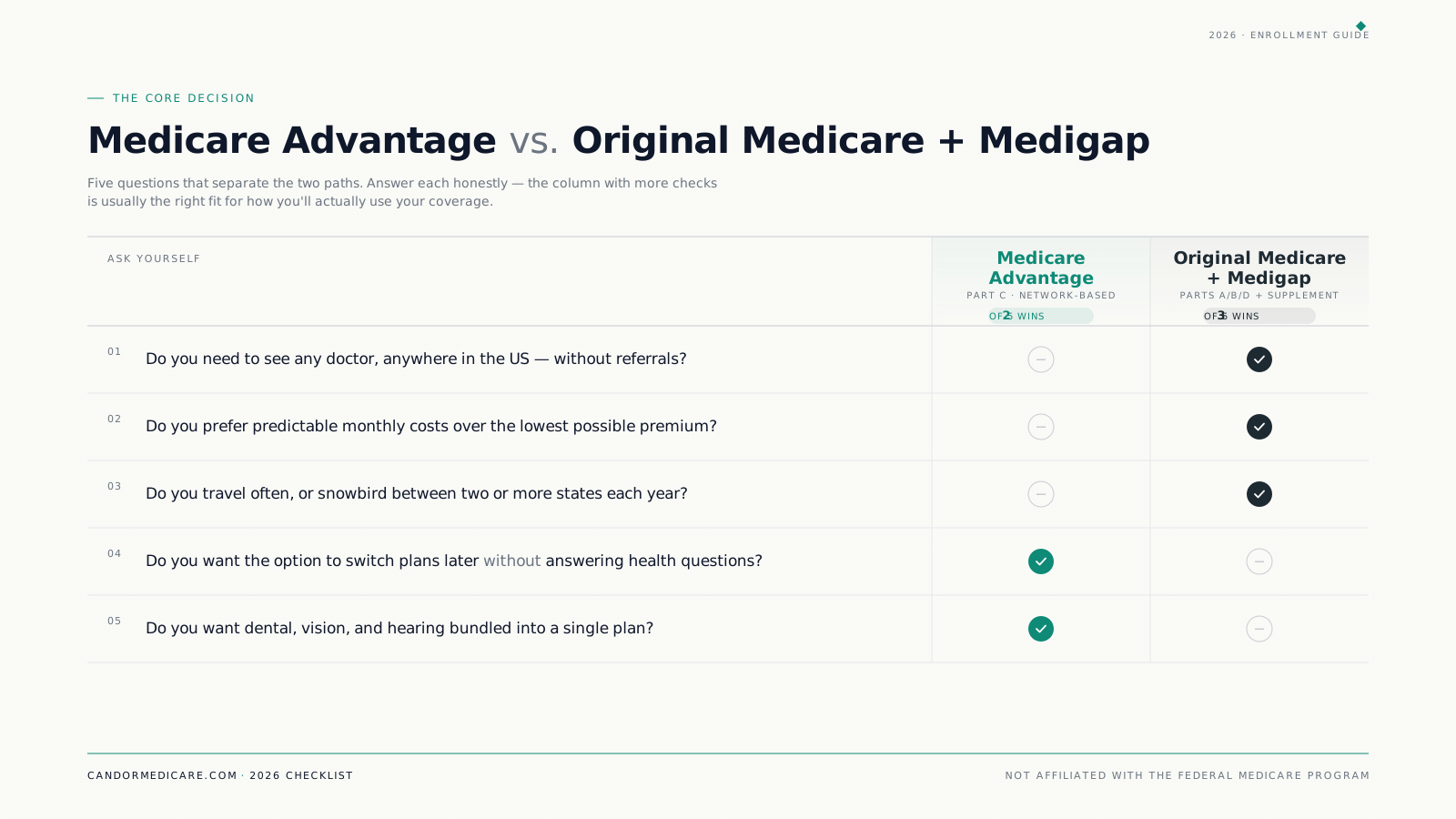
Medicare Advantage vs. Medigap decision flowchart comparing networks, premiums, out-of-pocket caps, and stability for people turning 65
The core Advantage-vs-Medigap decision, mapped against the five questions that usually resolve it.
01Network vs. premium

Keep your doctors or shop by price?

Every real Medicare decision starts here. If your oncologist is only in a narrow HMO network and you switch to a zero-premium Advantage plan that does not include them, the savings evaporate on the first specialist visit. If your primary care physician takes any Medicare-accepting provider and you rarely see specialists, a lean Advantage plan can be a legitimate fit.

A licensed advisor should look at each of your providers against the plan’s current directory before you enroll. Not last year’s directory — today’s. We recheck on the day of application.

02Bundle vs. unbundle

Medicare Advantage or Original Medicare plus Medigap?

This is the single biggest structural choice. Advantage bundles everything into one low-premium private plan with a network and an annual out-of-pocket cap. Original Medicare plus a Medigap plus a Part D plan costs more per month but offers nearly any US provider with no referrals and very predictable out-of-pocket costs.

The reason most advisors eventually default to Medigap for people who can afford it is medical underwriting. Once you are past the six-month Medigap Open Enrollment Period, insurers can ask health questions — making it harder to switch back from Advantage if your health changes in a way that makes Advantage inconvenient.

03Formulary vs. price tags

Which Part D plan actually covers your drugs?

Two Part D plans at similar monthly premiums can have wildly different total annual costs depending on your specific drugs, tiers, and preferred pharmacies. The plan with the lowest premium almost never wins once you price it against your real prescription list.

Medicare.gov’s Plan Finder remains the clearest place to compare total annual drug costs by plan, assuming you enter your exact medications, doses, and 90-day supply choice. We run this with every client and rerun it every fall during Annual Election.

04Nationwide vs. regional coverage

Will you travel or move after 65?

Original Medicare plus Medigap is the same everywhere in the US — any provider that accepts Medicare accepts your coverage. Medicare Advantage is usually tied to a county-level network, with limited emergency and urgent-care benefits when you leave the service area.

If you plan to snowbird, travel internationally, or help a parent in another state, factor that in now. Some Medigap plans include a foreign-travel emergency benefit. Almost no Advantage plans do.

05HSA vs. Medicare enrollment

Do you have a Health Savings Account?

If you are still contributing to an HSA, enrolling in any part of Medicare — including premium-free Part A — ends your ability to contribute. Because Part A backdates up to six months when you enroll after your birthday, you need to stop HSA contributions at least six months before signing up.

We see this one cost people thousands in IRS excise tax every year. There is a full walkthrough in the HSA trap section below.

06Extras vs. à la carte

Do you want drug, dental, vision, and hearing bundled?

Medicare Advantage plans routinely throw in dental cleanings, vision exams, and hearing aid allowances. The dollar value of those extras is real, but the caps are lower than most people assume — often $1,000 to $2,500 per year combined — and the networks are separate from the medical network.

If dental and vision are important to you, get the plan’s Summary of Benefits and compare against what standalone policies would cost. In many Florida markets, the bundled extras are genuinely competitive. In much of California, a standalone dental plan plus Medigap wins on total value.

07Advisor vs. hotline

Who will actually help you next year?

Medicare is a once-a-year decision for the rest of your life. The difference between an independent local advisor and a carrier hotline shows up when something goes wrong — a prior auth gets denied, a drug moves tiers, a doctor drops out of network in July.

Our clients get a 15-minute fall review every year and a same-day response when something breaks. That is the entire reason we exist. If you already have a trusted agent you rely on every fall, keep them; if you do not, this checklist exists because we want to be yours.

The IRS surprise most people miss

The HSA + Part A Trap

Health Savings Accounts and Medicare Part A do not play nicely together. The rule itself is short: you cannot contribute to an HSA in any month you are enrolled in any part of Medicare, including premium-free Part A. The landmine is that Part A is backdated up to six months when you enroll after your birthday month, so contributions you made months ago can retroactively become ineligible.

The number that catches people

Excess HSA contributions are subject to a 6% excise tax every year they sit in the account. Across several years of six-month backdating plus payroll contributions that did not stop in time, that tax routinely adds up to $2,000 to $3,000 — all avoidable.

Two common scenarios

Scenario 1: You plan to enroll in Medicare at 65 and stop working.

Stop all HSA contributions — including any employer match — no later than the first of the month six months before your birthday month. Confirm your payroll provider processed the change. If you enrolled in Part A automatically through Social Security, that backdated six-month window is the cleanest stopping line.

Scenario 2: You are still working past 65 with employer coverage and want to keep contributing.

Then you must not enroll in any part of Medicare, including premium-free Part A, and you must not start Social Security (which triggers automatic Part A enrollment). Some employers still encourage Part A enrollment at 65 because it offers secondary coverage — but it also ends your HSA eligibility. Run the math both ways before signing anything.

What to do if you already over-contributed

Talk to your HSA custodian about an excess contribution removal before your tax-filing deadline. The custodian will return the excess amount plus any earnings it generated, which eliminates the 6% excise tax for that year. If you miss the filing deadline, the 6% tax applies for every year the excess stays in the account. We are happy to flag this to your CPA during a consult — most of our Florida and California clients need a 15-minute call with their accountant once, not an ongoing engagement.

This section is general education, not tax advice. Every HSA situation involves tax rules we are not licensed to interpret for you specifically. Confirm anything material with a CPA before acting on it. The authoritative reference is IRS Publication 969.

Working past 65

The Still-Working Decision Matrix

Continuing to work past 65 changes the math in ways most generic articles do not cover. The rules depend on your employer’s headcount, whether the plan is active or COBRA, whether you have an HSA you want to keep funding, and whether your spouse is on your plan. Here is the matrix we walk through with working clients before they file for anything.

Your situationPart APart BPart DMedigap
Employer has 20+ employees, active group health plan, you're actively working

Unless you have an HSA you want to keep funding — then delay Part A too

Premium-free Part A is usually a good idea (no cost, acts as secondary)Safe to delay — Special Enrollment Period available up to 8 months after coverage endsDelay only if employer drug coverage is creditable (ask HR for the letter)Wait — buy during your Medigap OEP when Part B actually starts
Employer has fewer than 20 employees

Small-employer rules surprise people — confirm headcount with HR before delaying

Enroll at 65 — Medicare becomes primary, skipping it creates gapsEnroll at 65 — skipping triggers a lifetime 10% per year late penaltyEnroll at 65 unless employer coverage is certified creditableBuy during your standard Medigap OEP the first six months of Part B
You're on COBRA or retiree coverage

Waiting triggers Part B and Part D late penalties that never go away

Enroll at 65Enroll at 65 — COBRA and retiree coverage do NOT count as active employer coverageEnroll at 65 unless the carrier provides a creditable drug coverage letterBuy during your Medigap OEP the first six months of Part B
You're self-employed with an individual ACA marketplace plan

Cancel the marketplace plan effective the day Medicare begins

Enroll at 65Enroll at 65 — marketplace coverage ends when Medicare startsEnroll at 65 — marketplace drug coverage does not trigger an SEP laterBuy during your Medigap OEP
You’re a spouse under 65 on the working spouse’s employer plan

Check HR about whether you stay on the plan if the worker retires

Your spouse can enroll, you stay on their plan until you turn 65Follow the small/large employer rules above when your turn comesAlign with whenever your Medicare startsBuy during your own Medigap OEP, not theirs

A licensed advisor can help you get a formal creditable-coverage letter from your employer, time the HSA stop date, and schedule Part B enrollment precisely around your retirement date so there is no gap. We do this kind of sequencing every week for working clients in Florida and California — it is one of the fastest ways to save people $1,000+ in lifetime late penalties.

Military and veterans

If You Have TRICARE, VA Benefits, or CHAMPVA

Veterans and military retirees have one of the most complicated checklists in the country, partly because Medicare rules intersect with three different Department of Defense and VA programs. Here is the short version by program. A licensed advisor can walk through the specifics of your retirement status in a single 15-minute call.

TRICARE

TRICARE For Life (TFL) is the Medicare wrap-around benefit for retirees. You must be enrolled in Part A and Part B to keep TFL after 65. TFL pays second after Medicare and covers most remaining out-of-pocket costs, which often makes a separate Medigap policy redundant. Most TFL retirees do not need Advantage.

Part D is optional because TRICARE pharmacy coverage is creditable, so you skip the Part D penalty by default.

VA Health

VA health benefits alone are not creditable coverage for Part B — delaying Part B past 65 if VA is your only coverage triggers the lifetime late penalty. VA pharmacy benefits are creditable for Part D, so you can usually skip Part D without penalty.

Most veterans still enroll in Part B at 65 so they can use non-VA providers for emergencies, specialists, or convenience when a VA facility is far away.

CHAMPVA

CHAMPVA beneficiaries must enroll in Part A and Part B at 65 to keep their CHAMPVA coverage. CHAMPVA pays second to Medicare, similar to TRICARE For Life, and covers most remaining out-of-pocket costs.

CHAMPVA pharmacy coverage is creditable, so Part D is optional, but many beneficiaries enroll in a low-cost Part D plan for access to retail pharmacies outside the CHAMPVA Meds by Mail program.

One rule that surprises everyone

TRICARE and CHAMPVA both require active Part B to remain active — if Part B lapses for non-payment, TFL and CHAMPVA terminate and reinstating them can be slow and messy. Set up Medicare Easy Pay on day one and keep a small buffer in the linked account.

Eight Common Mistakes We See Every Month

Every one of these costs someone in our book of business real money or real access to care this year. Read the list, take it personally where it applies, and do not be shy about booking a consult to double-check anything you are not sure about.

  • 1. Assuming Medicare starts the day you apply

    Apply in your birthday month and coverage does not start until the first of the next month. Apply one month too late and you might go six weeks uninsured. The fix is filing in the first three months of your IEP.

  • 2. Keeping HSA contributions running into Part A

    Part A backdates up to six months. Contributions you made months ago can retroactively become ineligible and cost you a 6% IRS excise tax every year the excess sits in the account. Stop contributions six months before filing.

  • 3. Assuming retiree coverage or COBRA qualifies as active coverage

    They do not. Only current employer group coverage from a company with 20+ employees lets you safely delay Part B. Everything else ends in a lifetime late penalty.

  • 4. Skipping Part D because you take no medications

    Part D has the cheapest late penalty of any Medicare program, and it lasts forever. A $12-per-month plan protects you from both a permanent penalty and a nasty surprise the first time a doctor prescribes something new.

  • 5. Buying the first Advantage plan your neighbor recommends

    Networks, drug tiers, and extras vary county by county. The plan that works on your block might lose the best hospital in your county. A 20-minute plan comparison using your actual doctors and drugs prevents 90% of post-enrollment regret.

  • 6. Waiting past your Medigap Open Enrollment Period to buy Medigap

    Your six-month OEP is the only guaranteed-issue window nationwide. After it closes, most states let Medigap carriers ask health questions and reject or surcharge you. California’s birthday rule is one of the few exceptions.

  • 7. Ignoring the Annual Notice of Change letter

    Your Advantage or Part D plan mails the ANOC every September with every change coming for January 1. Most people toss it. That is how people end up on a plan where their cardiologist just dropped out of network.

  • 8. Calling the carrier instead of your independent advisor

    Carrier hotlines can only sell or service their own plan. An independent advisor can compare all plans, escalate a denied prior auth, and switch you at Annual Election if the plan is wrong. We work for you, not the carrier.

Florida specifics

Turning 65 in Florida

Florida is a Medicare Advantage–heavy market. As of the 2026 plan year roughly half of Florida Medicare beneficiaries are enrolled in a private Advantage plan, concentrated among a handful of national carriers with aggressive broker marketing. That creates three Florida-specific considerations we flag for every client.

1. Advantage networks vary county by county

A plan that works in Miami-Dade may not include a single top hospital in Palm Beach. We see people move from one Florida county to another and lose every one of their doctors because the Advantage network does not follow them. Always re-run the provider directory when you change ZIP codes, even within Florida.

2. No birthday rule and no annual guaranteed-issue

Unlike California, Florida offers no birthday rule or annual open-enrollment window for Medigap. Once your six-month Medigap Open Enrollment Period closes, carriers can ask health questions on every Medigap application, and they can decline or surcharge based on medical history. That means the Advantage-to-Medigap switch is not automatic later in life.

3. Hurricane disaster Special Enrollment Periods

If a federal or state-declared disaster (usually a named hurricane) disrupts a Medicare election window you would otherwise miss, CMS routinely issues a disaster SEP that extends your enrollment deadline by several months. It is not automatic — you or your advisor must request it. Keep the disaster declaration number and your ZIP code handy.

Snowbirds

If you split the year between Florida and another state, read the snowbird section below. Advantage networks are almost always a mismatch for snowbirds, and Original Medicare plus Medigap usually wins on total cost once you factor in provider access out of state.

Candor Medicare is licensed in Florida and we run plan comparisons down to the county level. If you want a quick Florida-specific read on your options, the Florida Medicare page is a good starting point.

California specifics

Turning 65 in California

California has three Medicare rules most of the rest of the country does not, and they all tilt toward Medigap being a more realistic long-term choice than in Florida. If you are retiring in California, these are the rules we walk through on every first call.

1. The birthday rule

Each year, starting on your birthday, you have a 60-day window to switch from one Medigap plan to another Medigap plan with equal or lesser benefits, from any carrier, with no health questions. That is uniquely Californian. In Florida and most other states, Medigap carriers can decline you for health reasons after your initial OEP — in California, you get an annual escape hatch. Practically, that means Californians rarely get stuck in an overpriced Medigap plan for long.

2. Community-rated Medigap pricing

California uses community-rated Medigap pricing, meaning the monthly premium is the same for a 65-year-old and a 75-year-old on the same plan. In most other states, Medigap premiums climb with age (attained-age rating) or start low and increase faster. Over a 25- to 30-year retirement, community rating makes Medigap dramatically more affordable at older ages. It also explains why we see more 70-plus Californians on Medigap than the national average.

3. Medicare Advantage trial right

If you enrolled in Medicare Advantage for the first time at 65 and want to switch to Original Medicare plus Medigap within the first 12 months, California guarantees your Medigap issue rights — no health questions. This is a federal protection reinforced by California regulators, and it is a safety net that makes starting with Advantage less risky for first-time enrollees.

The Kaiser question

Kaiser Permanente dominates several California counties and offers Medicare Advantage plans that are tightly integrated with Kaiser facilities. If you are already a Kaiser patient, staying with Kaiser on Advantage is often the right answer. If you are not, Kaiser Advantage means seeing only Kaiser providers, and that is a big life change at 65.

California also has a dedicated birthday rule primer and a general California Medicare page. We keep both updated with the current rate differences by carrier.

Snowbirds and multi-state retirees

If You Split the Year Between Two States

Snowbirds and cross-country caregivers need to treat coverage portability as a first-class consideration, not an afterthought. Most Medicare Advantage plans use county-level networks that do not follow you across state lines. That is fine for a two-week trip to see the grandkids, but for someone splitting six months in Florida and six in Pennsylvania, it is usually a deal-breaker.

The usual recommendation

Most snowbirds end up on Original Medicare plus a Medigap plan plus a Part D plan. Medigap is the same in all 50 states — any provider that accepts Medicare accepts your Medigap. Part D plans are regional but nationwide chains like Walgreens and CVS are preferred pharmacies on most plans, which softens the state-boundary issue.

Where you establish residency matters

Medicare uses your primary residence address to determine Part D availability, Medicare Advantage eligibility, and Medigap premium. Florida residency usually means lower Medigap premiums than New York or Connecticut, so establishing Florida as your primary residence can save $50 to $150 per month. California’s community-rated pricing means the premium does not climb with age — a different but equally attractive trade.

The Medicare Advantage visiting rule

If you insist on Medicare Advantage, ask specifically about the plan’s out-of-area visiting rule. Some national carriers offer PPO plans that cover non-emergency care at Medicare-accepting providers anywhere in the country, usually at a higher cost share. Make sure the plan you pick has that benefit in writing before you sign.

We work with enough Florida-Pennsylvania and California-Arizona snowbirds that the plan math has become a standard checklist for our team. Book a consult and bring both ZIP codes; we will run both scenarios side by side.

Preview of the printable Turning 65 Medicare Checklist PDF with the month-by-month timeline

Free printable

Get the Full Checklist as a PDF

One page per month, space for notes, and the Florida and California callouts printed alongside the steps. Stick it on the fridge, bring it to your kitchen-table review, or email it to the family members helping you plan.

We do not sell your information. See our Privacy Policy.

Frequently Asked Questions

The ten questions we get asked most by people turning 65 in Florida and California. If yours is not on this list, that is a free consult question — bring it to the call.

Ready for a Human to Double-Check Your Plan?

You have the checklist. You know the deadlines. You understand the HSA trap, the still-working rules, and the state-specific wrinkles. The last piece is pressure-testing your plan against the real 2026 plan landscape in your ZIP code.

A 20-minute call with a licensed Candor advisor covers: your doctor and drug list vs. available plans, your IEP or SEP dates, a sanity-check on Advantage vs. Medigap, and a plan for enrollment day. No pressure, no pitch. CMS caps our commission — we get paid the same no matter which plan you choose, so the recommendation is the one that fits you.

Mon–Fri 8am–8pm local time. We call back the same business day.

Reviewed by the Candor Medicare editorial team

Portrait photo of a licensed Candor Medicare advisor

Candor Medicare Editorial Team

Licensed Medicare advisors, Candor Financial Partners LLC

Licensed independent agentsLicensed in all 50 states

This pillar is maintained by the Candor Medicare editorial team — a group of licensed Medicare advisors who meet weekly to review CMS rule changes, state-specific regulations, and the questions our Florida and California clients ask most. Every section is reviewed against the CMS Medicare & You 2026 handbook and our own enrollment experience. We take only CMS-capped commissions, so the recommendation you get is never influenced by which carrier pays the highest override.

About Candor Medicare →·State license details